Tax day has come and gone. That makes it a good time for us to have the talk. The money talk.
And I will spare you the version I once received from a self-important, arrogant financial advisor I worked with 25 years ago. He never asked me questions about my career or aspirations. Instead, he rambled and scribbled his musings on a paper napkin about how compound interest works as if I’d never heard of math. (By the way, I fired him. Hehe)
Here’s what tax day actually reveals: not just what you earned, but how much agency you have over it. Where it went. Who decided. Whether you were in the room for those decisions or just signing off on them after the fact.
Too many high-achieving women are brilliant at earning and passive about everything else. I have numerous friends who have admitted to me, “I love making the money, and I trust my husband to handle all the finances.”
That astounds me.
Don’t be one of those people.
Yes, it’s easier in the short term. It’s clean lanes for each of you. But it doesn’t always work out well. Ask Belle Burden, a wealthy former corporate attorney who handed over financial control to her husband for twenty years during their marriage. In her bestselling memoir, Strangers, she shamefully admits, “I settled into the vagueness, luxury, and privilege of not knowing.” Then, without warning, her husband abruptly left her and three kids. Not only was she dumbfounded, but she didn’t know how much money he made or anything about their investments, insurance, or taxes. She didn’t even know the passwords to their bank accounts.
Her story even had Oprah’s jaw dropping.

Here’s some tough love: whether you marry or partner, never abdicate financial control to another person. No matter how much you love the. No matter how much you trust them. Even if they earn more than you do. Even if it’s complicated. Even if it’s inconvenient. Even if you suck at math.
None of those excuses will protect you if things go sideways in life. If they leave. If they get sick. If they become abusive.
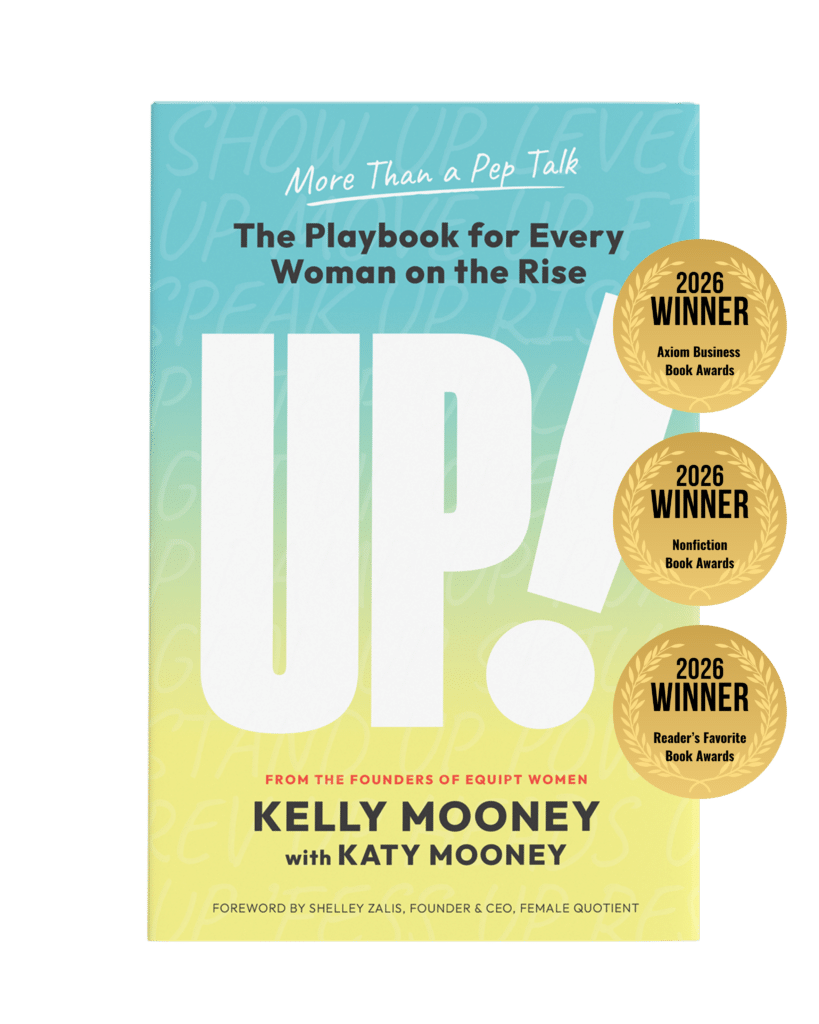
Taking charge of your career means nothing if someone else is in charge of what your career produces. No matter your history with money, being money savvy is a choice. And it’s never too late. I feel so strongly about this that I wrote a chapter, “Get Good With Money,” in my upcoming book: UP!
The full chapter is too long to include here, but here is a short excerpt:
- Spend with intention. Do you know how much you spend each month? Are you living within your means, or do your bills stress you out? When you align your spending with your values and long-term goals, you spend with intention. An intentional approach reduces consumption anxiety, prevents irrational splurges, and keeps debt manageable.
One way to become more intentional is to establish a personal budget that allows you to live within (or below) your means. Use a budget tracker to manage your spending, prioritize paying off debt, save for emergencies, and invest in your future. Curb your spending impulses with a 24-hour “contemplation period.” By waiting one day, you’ll buy less stuff you don’t need (and we all need less stuff). - Limit lifestyle creep. As you earn more, you’ll be inclined to spend more, too. A raise, a bonus, a new job, or debt relief results in more available cash. For most people, that leads to a lifestyle upgrade. Treat yourself, however, be conscious of too much lifestyle creep. Instead, aim to invest more rather than spend more when you have extra money. (Your future self will thank you.) Also, periodically review how much you’re actually spending every month to ensure you remain mindful and within your budget.
- Become literate. Money-related topics, such as compensation, insurance, and investments, may be overwhelming. Learn the foundational vocabulary by tapping into educational resources such as financial newsletters, banks, online discussion forums, webinars, podcasts, and an array of personal finance books. Explore the free tools and access to experts at SavvyLadies.org or the Financial Planning Association. Start with personal finance basics to learn how to manage your income and expenses effectively. Consider working with a personal financial advisor to help you understand and achieve your goals. Becoming money literate is a lifelong pursuit, so don’t worry about what you don’t know yet. Just keep asking questions.
Getting good with money is one of the most consequential choices you can make. It puts you in the position to build financial security, weather life’s unpredictability, and achieve your long-term aspirations. Most importantly, it lets you live a life where you call the shots.
If you liked this money talk and want more tips and tools, consider pre-ordering UP!
You are equipt to keep control of your hard-earned money.