“Just start your own company!”
This is the advice a high-profile professor I teach with gives his MBA students (or any professional in their 20s or 30s). Because he was a successful entrepreneur, he is very convincing with mantras like “Never work for someone else” and “Be your own boss.”
In fact, about 17% of recent college grads are already running a business they started during or before college. These are usually side hustles to fulfill a passion or pay the bills. Yet just 6% of these will still be standing a decade later.
Those aren’t great odds.
I founded a company, and even with decades of experience, relationships, and a strong reputation, it’s much more difficult than I anticipated. I encourage anyone to do it with their eyes wide open to when it is (or isn’t) a good move.
6 reasons why starting a business is NOT a good move:
- You want to be a startup person. The fantasy of being called a founder, having a CEO title, or proving something to someone runs dry fast. Entrepreneurship is mostly years of long days, unglamorous heads-down execution, not an identity.
- You’re running away from something. Starting a company to escape working for someone, a bad boss, a frustrating job, or a rough patch is one of the most reliable ways to end up miserable. The problems you’re fleeing tend to follow you — except now you’re also broke and stressed.
- You have no financial runway. Starting a company while financially desperate forces bad decisions — taking bad clients, rushing products, accepting bad investors just to survive. If you have no savings and no plan for 18–24 months of lean living, the timing is wrong even if the idea is right.
- You haven’t tested the idea. If you haven’t talked to 20+ potential customers, tried to sell the thing before building it, or found even one person who’d pay for it — you’re not ready to start a company, you’re ready to start researching one.
- Your life circumstances require stability. Aging parent, partner in transition, new baby, or health issues make founding a company during peak personal chaos a recipe for both failure and burnout in your relationships. Timing matters enormously.
- You’re a specialist who hates wearing many hats. Starting a company solo often means you’ll do operations, finance, strategy, sales, marketing, and IT. You may spend 80% of your time doing the 20% you don’t enjoy. Without a co-founder who covers your gaps, this is a grind most people quit.
If you can clearly answer–why this idea, why me, and why now— the problem is real, you have some edge in solving it, and the conditions in your life are workable — those are much stronger signals than any amount of well-intended, professorial encouragement. I want you to be successful by making the move at the right time, in the right circumstances. So, if you’re ready, go for it!
And, you have another option
Another option is to get some experience. Find an opportunity at a growing organization where you can build relationships, develop new skills, and learn to navigate the workplace.
If you are feeling a little overwhelmed, I get it. It can be daunting to know where to start. Don’t worry. I got you covered.
Here are 3 great books to guide you to:
- Find a job. One of the books I love recommending is “Never Search Alone” by Phyl Terry. He has created a suite of free tools and a volunteer community to guide peer groups through the job search process.
- Know yourself. Not quite sure who you are or what you want? Suzy Welch’s “Becoming You” is a practical guide for crafting your authentic life and career. And she’s raised four kids who are now adults, so she’s had a front-row seat to the trials and tribulations of young professionals as they secure their footing.
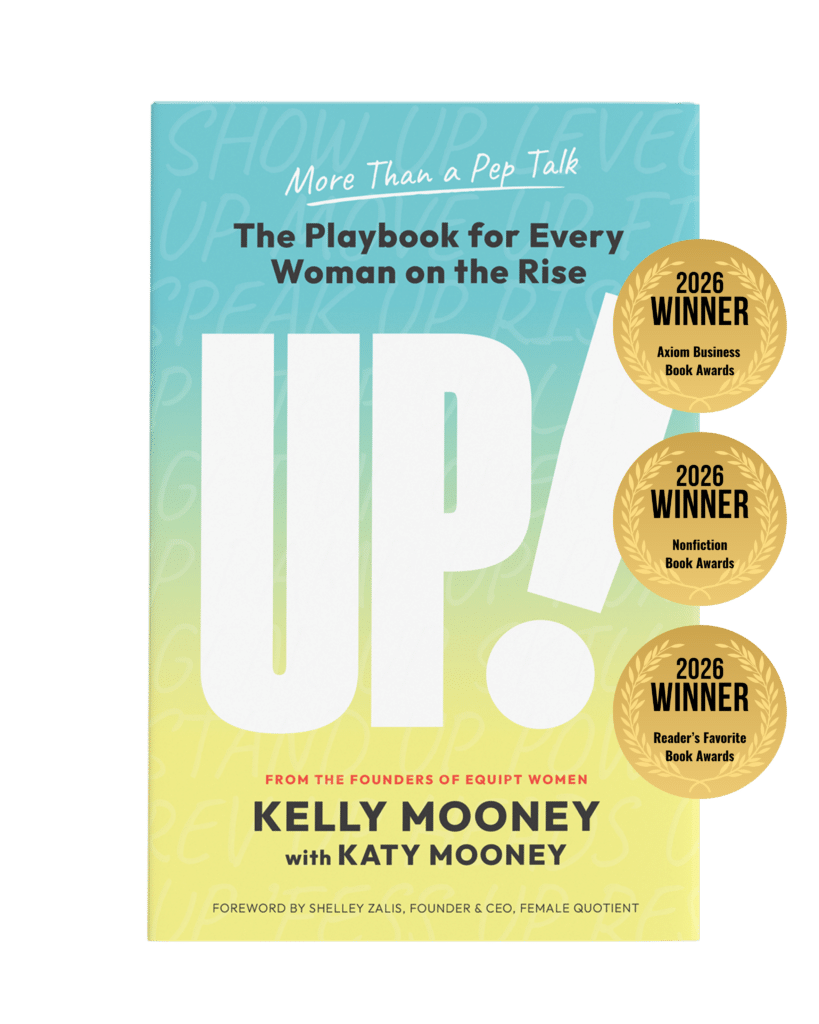
- Start with a strong foundation. Once you’ve landed a new role, you want to start strong. My new book, “UP! The Playbook for Every Woman on the Rise” reveals how to navigate the unwritten rules in the workplace. Written with my sister, Katy Mooney, it’s more than a pep talk for corporate life; it’s a step-by-step guide for building a career and life you love.
Whatever you choose. You’ve got options and the support resources you need to thrive.
You are equipt to start strong,