This year, the country turns 250. Time to kick back and enjoy the fireworks, a long weekend with family, a juicy burger, and a cold beer. 🍺 (That’s my plan anyway.) 😉
If you need a refresher on what makes our country something to be proud of, check out historian Heather Cox Richardson’s 250 to 250 Project – one-minute videos honoring the anniversary of the Declaration of Independence.
But before the celebrations go into full swing, let’s calibrate on the scoreboard for women. If you primarily get your news from social media, you might be confused or unsure about where we stand overall today. The truth is, it’s more complicated than a quick skim suggests.
Allow me to share some straightforward truths. I have attempted to keep this factual rather than political. And I acknowledge this isn’t my typical content – but hey, the country only turns 250 once, and it’s a good time to understand what that means for women, for you.
For starters, we have come a lonnnnng way toward equality. Here are a handful of major milestones over the last century or so:
- 1920: The 19th Amendment gave women the right to vote.
- 1963: The Equal Pay Act prohibits pay discrimination on the basis of sex.
- 1972: Title IX gave women equal opportunity in education and athletics.
- 1973: Roe v. Wade gave women nationwide the right to bodily autonomy.
- 1974: The Equal Credit Opportunity Act gave women the right to a credit card.
- 1991: The Civil Rights Act gave women the right to sue employers.
Most of that is not eons ago. Your mother (or grandmother) lived it. I lived it! (Well, not that 1920 part lol.) 😆
If you’re reading this while building a business, enrolling in a graduate program, deciding whether to have children, or managing your own money, every one of those choices exists within a framework of rights women didn’t always have.
It’s also worth remembering something even more foundational: women are not mentioned in the Declaration of Independence. Not once. “All men are created equal.” What about the rest of us?!? 😤
And here’s the thing that distresses me: Women are STILL not guaranteed equal rights.
Why does that concern me, and why do I think it might concern you?
Every right on the list above exists because of a law or a court ruling; it’s not a constitutional guarantee. A different Congress or Supreme Court can undo a law or a ruling. But, a constitutional amendment? Next to impossible. That’s the real reason any progress toward equality has always been more fragile than it appears.
You might be wondering, isn’t that what the ERA has been striving for?
Yes! But it is not (yet) the law of the land.
Here’s a short history: The Equal Rights Amendment — guaranteeing equal rights regardless of sex — was first introduced in 1923. Congress passed it in 1972. (This newsletter doesn’t have the space to explain why it took lawmakers 50 years!) Virginia became the 38th and final state needed to ratify it in 2020, technically clearing the bar set by the Constitution. But the National Archivist still hasn’t certified it as the 28th Amendment, citing an expired deadline — and the legal fight over its status is working its way through federal courts.
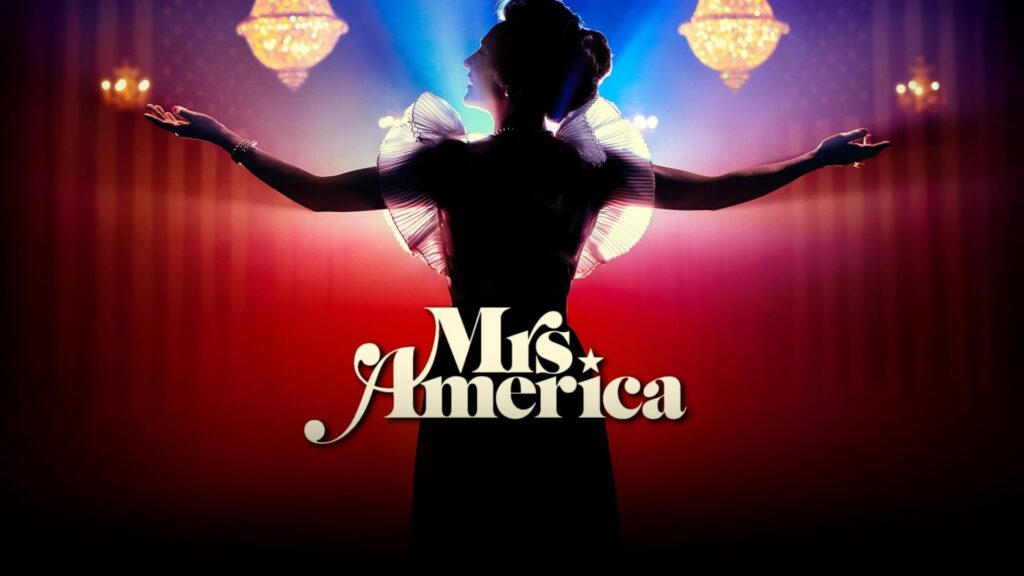
Maddening. 🤯 (Note: to learn more about how women got in our own way, watch Mrs. America.)
As Oprah often says, “Here’s what I know for sure” – progress isn’t one-way. It’s never assured. In fact, women’s rights are at risk in ways that make continued progress far from inevitable. And we can’t sit around waiting and hoping for things to move in our favor.
Consider the setbacks and future risks–and why it matters to your career and life:
1. Federal abortion rights are gone.
This is not new news, but the implications are ongoing. After 49 years, the federal right to decide whether and when to have a child is gone, and abortion law has reverted to a patchwork of state laws–maintaining choice for some women and taking it away from others.
Why is this a career issue?
Reproductive autonomy lets you decide not only whether to have kids but also when. That timing decision is directly tied to when you return to school, take the stretch assignment, get married or choose a life partner, or start a business. This law reduces choice at every level.
2. Birth control is becoming harder to access, too.
Nobody’s banning the pill–yet. But access is slipping away in a thousand small cuts. Federal family-planning funding that serves millions is being redirected from traditional birth control to promoting “natural family planning.” In states with abortion restrictions, prescription fill rates for contraception are dropping faster than elsewhere — partly because clinics that offered both abortion and birth control have closed and OB/GYNs are leaving those states.
If you live in states that are restricting access and closing clinics, you may struggle to get the prescription you want when you want it.
Again, this affects your choices, your health, your timing, and your aspirations.
3. Voting is about to get more complicated–especially for women.
The SAVE Act, a federal bill working through Congress, would require proof of citizenship to register to vote, such as a birth certificate or a passport. Sounds reasonable. Yet, there’s a catch. A big one. An analysis by the Center for American Progress (using Pew and Census data), estimates that 69 million American women have legal names that don’t match their birth certificates because of a name change at marriage.
69 million women!!!
Several states have already enacted their own versions of this requirement. The fix usually requires producing a marriage certificate, a divorce decree, or a court order to prove you are who you say you are — in addition to the original proof of citizenship. For example, in New Hampshire — which already has this law — married women showed up to register and couldn’t, because they didn’t have their marriage license with them to prove the name change. One woman had to come back three separate times. (I did not change my name when I got married, but if I did, I would have NO IDEA where my marriage license is.)
And the citizenship-proof fight isn’t the only voting conversation happening right now. A small but increasingly vocal movement, including voices with real influence in Washington, has begun to float the idea of doing away with individual voting altogether in favor of one vote per household, cast by “the head of household.” (And, yes, these voices are referring to men.) It’s nowhere near becoming law. But the fact that it’s being spoken aloud on national television and promoted on social media (by men and women!) is itself the headline.
4. Paid leave and caregiving support remain absent, and women still pay the price.
Women have entered the workforce in record numbers. But when children arrive, parents age, or family members need care, women still shoulder most of the responsibility. At the same time, the United States remains one of the few developed nations without a federal paid family leave program, and affordable childcare remains out of reach for many families.
Caregiving often comes with a hidden career tax. Women are more likely to reduce their hours, turn down opportunities, take extended breaks from work, or leave the workforce altogether to care for others. Those decisions have compounding effects over time, affecting earnings, promotions, retirement savings, and long-term wealth.
For all the progress we’ve made, too many women are still forced to choose between caring for the people they love and pursuing the career and life they want.
5. The career support built to help women advance is being dismantled.
Mentorship, sponsorship programs, leadership training — the infrastructure designed to get more women promoted is being unwound fast. After the federal government ended diversity requirements for its own contractors, scores of major employers followed by ending diversity hiring targets and disbanding internal DEI teams. Supporters call it a “return to pure merit.” Critics call it “dismantling the few structured paths that helped women reach rooms they’d otherwise have had to fight twice as hard to enter.”
Either way, the infrastructure is vanishing quickly, limiting your opportunity to be paid and promoted at the same rates as men, not to mention your long-term wealth potential.
So what do we do with this?
Don’t panic. Or doomscroll. 😵💫 Instead, take action.
- Don’t just vote–cast an educated vote this year. Spend time learning about what the candidates in your state truly stand for and support them by volunteering, donating, and voting.
- Check your voter registration now. If your name doesn’t match your birth certificate, find out today what your state requires and locate the documentation you may need.
- Know where your state stands. Research your state’s reproductive and contraceptive access before you need it in a crisis.
- Engage your employer. Find out the status of your organization’s programs to help women advance. If they are being defunded and/or deprioritized, ask to meet with leadership to prevent this or to create new programs. Inquire about policies that support caregiving, parental leave, or flexible work schedules.
- Talk about this stuff with friends. Seriously, talk about it. It’s easy to tune out. Hope that this era will pass, and we’ll return to normalcy. But that’s putting your head in the sand and risking more backsliding. Talking with friends doesn’t have to be polarizing political banter. Focus on how this affects your choices and the pursuit of the career and life you want.
Progress didn’t happen by luck or by accident. Somebody fought for every inch of it. 💪Where do we go from here? Well, that’s up to all of us.
You are equipt to appreciate and fight for progress.