
When I use the phrase “building influence at work,” most Gen Zers and Millennials cringe. They immediately conclude that I am suggesting they post selfies of their latest outfit, skincare routine, or their point of view on, well, anything. That’s not what I mean at all. In fact, no ring lights are required for this kind of influence, and your follower count is irrelevant.
The influence I’m referring to happens in hallways, conference rooms, Slack channels, one-on-one conversations, and over coffee. It’s about becoming someone people trust and remember when important tasks need to be completed, ideas need to be generated, or decisions need to be made.
More specifically, real influence at work means:
- People seek your input before decisions are made, not after
- Your ideas get traction in meetings and move forward
- You’re included in conversations and projects above your pay grade
- When you speak up, people listen – and remember what you said
- You can connect people and make things happen across teams
Notice what’s not on that list: having direct reports, a VP title, or a corner office.
When I worked at IBM, “Building Influence with Your Coworkers” was the company’s top professional development course. Colleagues worldwide recognized the importance of influencing decisions, assignments, and policies, even without a big, fancy title. (Especially without a big, fancy title.) The good news? You can start building influence now, regardless of your title. Here are five strategies that actually work:
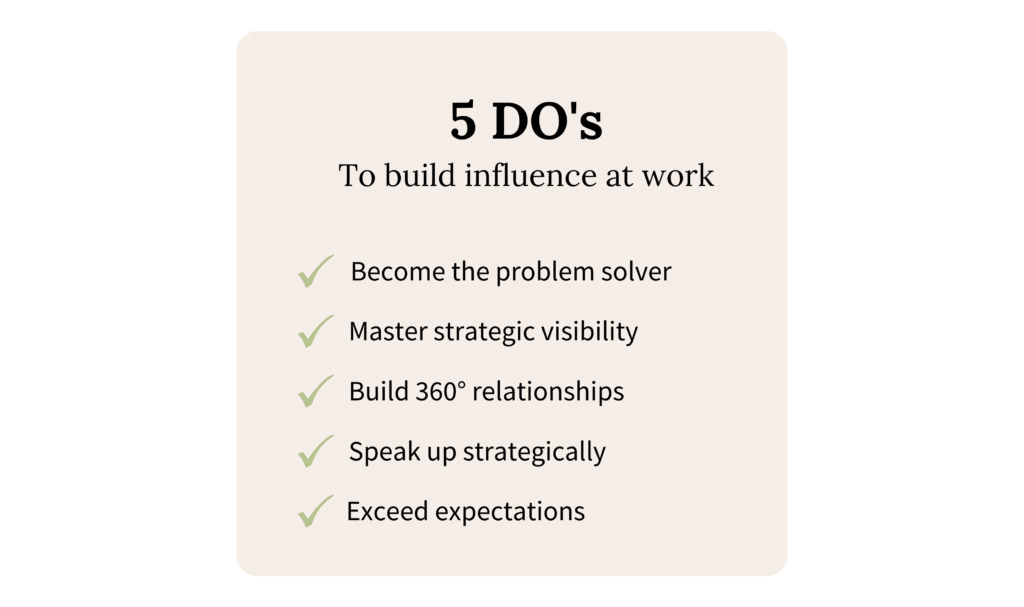
- Become the go-to person for solving specific problems. Focus on one recurring issue or pain point in your organization and take it on as your unofficial responsibility. This might mean fixing the chaotic onboarding process for new hires or enhancing cross-team communication with a Slack channel or a monthly report. If there’s ambiguity about who is handling what, start a weekly email to share wins and key project highlights. Don’t ask for permission, don’t wait for buy-in – just start.
- Master the art of strategic visibility. Being good at your job isn’t enough if no one knows you’re good at your job. (That sucks, but it’s true.) You need to make your work visible without being obnoxious about it. Focus on being helpful to others rather than “look what I did.” Share learnings in team meetings: “Here’s what we discovered in the X project that might help with Y.” Write brief project recaps or case studies and circulate or volunteer to present your team’s work to leadership. Comment thoughtfully on others’ work in public channels (everyone appreciates engagement with their work).
- Build relationships up, down, and across the organization. Influence comes from being well-connected, not just well-performing. Map out your relationship strategy upward by identifying 2-3 leaders above you who should know your name and work, and get on their radar. Ask thoughtful questions in all-hands meetings, request a 20-minute info chat about their career path, and volunteer for projects they’re sponsoring. They’ll become your collaborators, advocates, and intel sources.
If you only interact with peers virtually, try reaching out to get to know them better, ask for feedback, or see how you can support them in their work. For junior colleagues, mentor them generously. They’ll remember who helped them, and they’ll talk about you. - Speak up strategically in (and after) meetings. This is often where many women lose influence points – either by staying quiet or by speaking up in ways that don’t land. Before the meeting, review the agenda and prepare at least one meaningful point or question. If you have a big idea, pre-socialize it with key stakeholders, so you have allies in the room. Don’t wait for the “big reveal” in the meeting and hope they will be on board.
During the meeting, speak early in the discussion. The longer you wait, the harder it gets. Keep your points clear and concise—one strong idea is better than three rambling ones. Build on others’ ideas generously: “Adding to what Sarah said…” (this helps build alliances). Use phrases like “Based on my research, I recommend…” or “Given what we learned from our previous project, let’s consider…” instead of “I’m just wondering if maybe…”
Don’t forget to follow up on action items promptly. And if your idea was dismissed, speak 1:1 with the decision-maker to understand why. - Go beyond just completing tasks – exceed expectations. This is the foundation on which everything else is built. You can’t influence people if your work is average or what any other colleague produces. You need the slight edge. Take the extra step to overdeliver. Instead of merely providing the requested analysis, create a one-page summary with recommended next steps. Instead of just wrapping up a project, generate documentation so others can replicate it next time. Instead of working with an inadequate process, develop a new one. Your goal is to become indispensable.
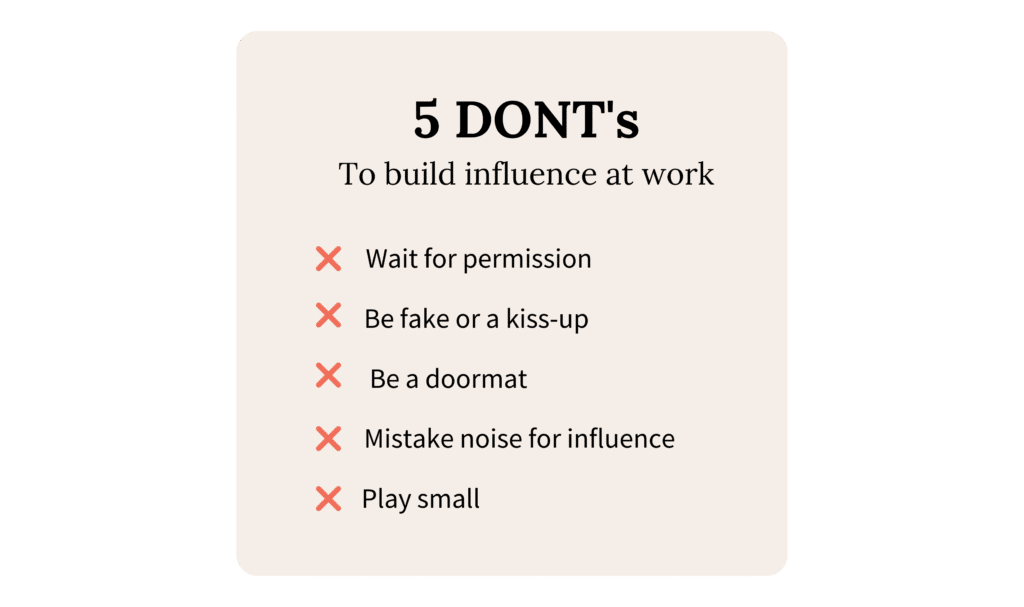
And some friendly advice for what NOT to do as you’re building influence–avoid these common mistakes:
- Don’t wait for permission. If you wait to be invited, you’ll wait forever. Start taking initiative on small things now.
- Don’t be fake or a kiss-up. Be genuine. Connect sincerely and support others in ways that highlight your strengths.
- Don’t be a doormat. Influence comes from being valuable, not just available. Say yes strategically, not reflexively.
- Don’t mistake visibility for influence. Posting on LinkedIn constantly or talking a lot in meetings isn’t influential if your ideas don’t lead anywhere and no one is engaging.
- Don’t play small. Advocating for your ideas might ruffle some feathers, but that’s part of building influence. Stay positive and don’t apologize for having something to say.
If you pursue the five strategies above and avoid the pitfalls, the fancy title will come eventually. But the influence? You can start building that today. You’ll discover that having influence makes work more enjoyable, rewarding, and yes, a little more fun.
You’re equipt to be an influencer at work.