It’s back to school. Even though I’m not buying textbooks, filling out forms, or sorting out a class schedule (for me or my kids), I feel new energy surfacing. Yet, I can’t quite distill it.
Maybe it’s that I feel rejuvenated from my slow-mode July with longer days of sunlight, or the satisfaction of finishing some great summer reads. 🤷♀️
Somehow the back-to-school season makes my mind swirl with new possibilities – what’s next at work and in life. I don’t like waiting for the year to end to reflect and plan. Now seems like the right time.
You relate?
Maybe you’re bored with your job and eager to develop new skills. Maybe recruiters are calling (Pro tip: always take the call). Or you’re ready for a career pivot.
Where do you begin? I’m often asked this by young professionals, parents who have forked out big money for college tuition, and people who feel like they’re on a career path to nowhere.
If you don’t have time to read the entirety of my new book, “UP!” I think the chapter entitled “Bank on Yourself” will help you strategically focus your time, talent, and energy.
Here’s an excerpt:
How much have you invested in your own future? Maybe you have a savings account or an IRA, participate in a 401K plan, or invest in the stock market, digital currencies, or real estate. As you build a career and a life, you may do some or all of those things. But there are other kinds of investments to make in yourself that pay big dividends.
Many professionals overlook the most obvious and beneficial investment they could make—the investment in themselves. When you invest in yourself, you’re choosing to spend time and money to grow your skills, increase your options, and secure your financial independence. This allows you to make bold moves without being held back by worry or fear. It signifies a commitment to realizing your potential and ensuring you’re not leaving any opportunities on the table.
It’s time and money well spent. According to Gallup, workers who participate in upskilling programs see an average annual income increase of 8.6%. And 39% of workers reported they advanced at their current job after completing skill development courses. For some professionals in knowledge-based industries, certifications and licenses may boost weekly pay by 30% or more.
Consider these ways you might invest in yourself:
- Grow technical skills and knowledge
- Develop stronger communication skills
- Participate in leadership training
- Earn industry-specific certifications
- Pursue an advanced degree
- Build your network
- Strengthen personal and professional relationships
- Join professional membership organizations
- Cultivate your personal brand and reputation
- Start a side hustle or a business
To create your own investment plan, start by asking yourself:
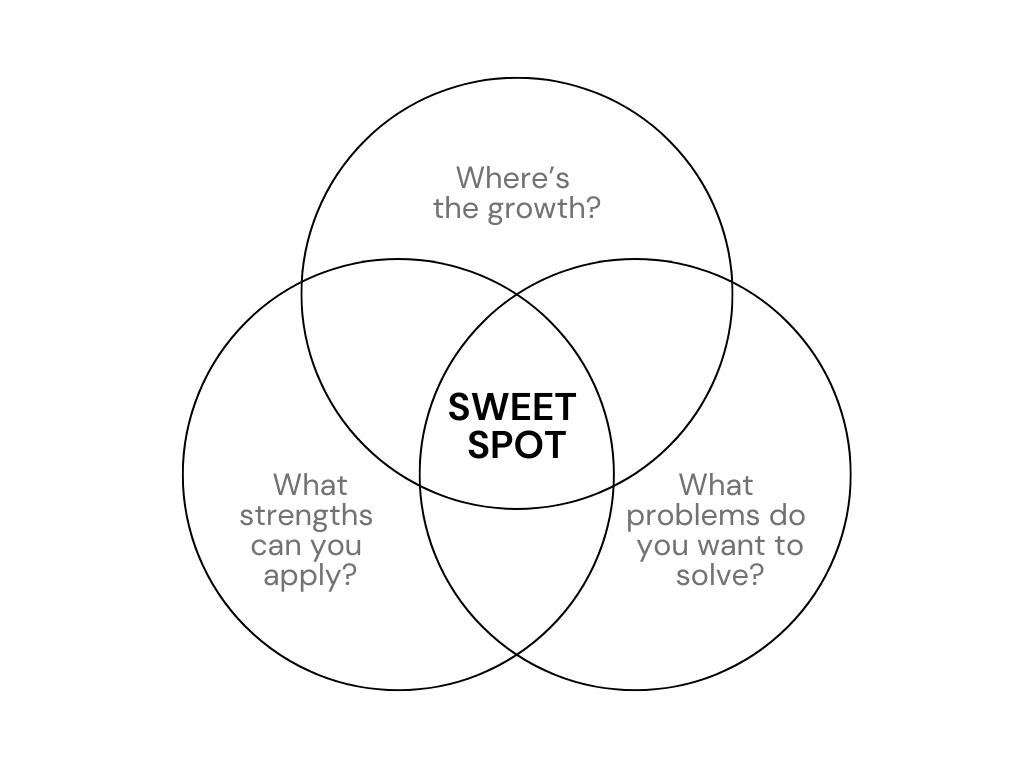
1 Where’s the growth?
Always invest in something that’s growing or emerging with promising signs of growth. To maximize your investment in yourself, identify high-demand skills in your industry or an industry that interests you. Look into jobs and fields that are growing and have high-salary potential, long-term skill relevance, and transferability (how the skill can be easily applied to a variety of roles or industries).
For example, you may decide to develop skills in AI because the market is hot and expected to grow exponentially, salary potential is high, and long-term relevance is strong. Also, AI skills are not limited to tech—they apply to a wide range of fields including health care, retail, finance, legal, education, customer service, operations, and marketing. In contrast, you may avoid learning an outdated software platform, manual skills that will become automated, or certifications that lack industry recognition.
2. What big problem(s) do you want to solve?
Think about the problems you find intrinsically motivating to solve. There are many challenges the world needs help with: climate resilience technologies, global disease prevention, affordable housing and health care, equitable access to education, renewable energy, food security, and AI ethics—to name just a few big ones.
You may be motivated to solve problems that serve your local community, such as developing mental health resources or reducing food waste. Brainstorm problems you’d be thrilled to be thinking about and collaborating to solve.
3 What strengths can you apply?
Think about your strengths—what you enjoy doing, find energizing, and look forward to working on. You may be good at these now or you’re on your way to becoming good at them. You’ll learn faster and enjoy your work more when you’re using your strengths, which are good indicators that you will stick with your development efforts. Also, applying your strengths is more likely to get you noticed, promoted, and rewarded—leading to exponential returns rather than incremental gains.
Now, look for the sweet spot where your answers overlap. That’s the ideal investment for you.
Most employers provide some internal professional development opportunities or offer a stipend for you to pursue outside programs. If you are unsure, ask your manager in a conversation like this:
“I’m interested in growing my project management skills and want to take an 8-week online course offered through the local university. This will not interfere with my current responsibilities, and it will allow me to gain a foundational understanding of project planning, risk management, and budgeting. The course cost is $1,595, and I’m confident that I can immediately apply the learnings to our team projects, making it a strong return on the investment. Would you approve this professional development expense?”
Even if your employer doesn’t cover the cost of professional development opportunities, there are loads of low-cost or free options available to you. Build time into your schedule—even 15 minutes a day will make a difference—to dig into resources such as LinkedIn Learning, ChatGPT, YouTube, podcasts, and the public library.
Investing in yourself is the ultimate act of self-leadership because you’re choosing to bet on your own potential. Much like a financial investment, the compounding effect of investing in yourself over a career is critical because each new skill or certification increases your market value. And no economic downturn or organizational change can take the value of those investments away from you. When you’re willing to invest time and money in your personal and professional development, you are securing your future no matter how it unfolds.
In UP!, I share an example of how a talent recruiter used this framework to find her own sweet spot. Grab a copy here.
Let me know if you’ve discovered your sweet spot investment! Once you adopt a mindset that you are your best investment, new opportunities open up and you’ll feel emboldened no matter which direction you head.
You’re equipt to bank on yourself.