Sunday is Mother’s Day. The one day moms get to feel the societal glow. Where brunches and parks overflow with gratitude. (Personally, my favorite way to spend Mother’s Day is with a little quiet time.) 😉


If only this annual day of celebration extended into the workplace. Sadly, that’s not the case. Women are still penalized with each child, while men are rewarded.
If you haven’t experienced the motherhood penalty or haven’t noticed it happen to others, you might be wondering why women are penalized. 🤔
Here’s what typically goes down–the invisible rules at work come into play. Her commitment is questioned. Her competence is questioned. Her choices are criticized. She is perceived as less flexible, less dependable, and less available at all hours to the organization–and worse, she experiences a 5-20% decline in pay per child, often referred to as the mother penalty.
In contrast, when men become fathers, their professional standing improves. They are seen as more stable and dependable–above all, they are leadership material! In fact, fathers often get a 6% pay increase per child–what’s known as the fatherhood bonus(!). 🤢
So when will this get better? It will get better when organizations:
- Stop assuming moms are opting out. Instead of overlooking a high-performing mom because “she has a lot on her plate at home,” present her with an opportunity. Don’t decide on her behalf.
- Reward outcomes, not face time. Work happens in cars, during commutes and workouts, early in the morning, or late at night. Because she is not sitting where you can see her, that doesn’t mean she isn’t working.
- Recognize that moms get stuff done. They don’t have time to gossip or talk about the latest Netflix hit. They prioritize, delegate, and manage their time efficiently. Most are the CEO of their households, and this skillset transfers to the workplace.
- Cut the BS. Don’t judge moms for leaving early for school pickup and praise dads for getting to that soccer game on time.
Recently, I was a guest on Kristel Bauer’s Live Greatly podcast, and she asked me how I avoided the motherhood penalty and how I built a career while raising two kids. Here’s what I told her and what I advise others to consider:
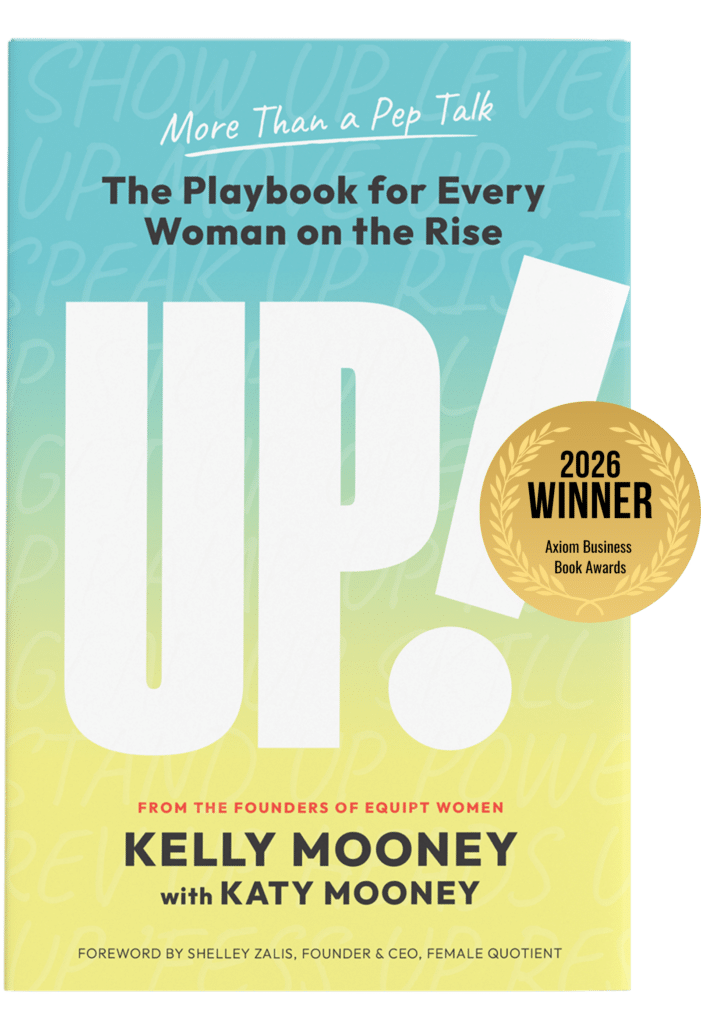
- Pick a great partner. I’ve been married for over 33 years, and my husband has quietly cheered on my dreams and successes. He has never tried to contain me, control me, or keep me small. Even if you never marry or prefer to be single, surround yourself with people who inspire you to think bigger and reach higher. It might be time to loosen ties with old friends who hold you back. (In my new book, I wrote a chapter called “Choose your crew” that goes into this more.)
- Pace yourself. When I had my kids, I slowed down for four years. I reduced my schedule to four days (and 80% pay), and so did my husband. We dramatically reduced our expenses and focused on being present as a family. Then, when I felt ready, I accelerated my career. I ramped up my efforts, put myself forward for bigger roles, and negotiated more compensation. Everyone’s path and timing are different. You don’t have to be full throttle all the time.
- Stop caring about what others think. A coach helped me internalize the mantra: care more about less. (This is also a chapter in my new book!) This means focusing on a few things that really matter: back then it was my spouse, my kids, my career–and intentionally blocking out distractions such as what my friends or neighbors might think about my choices. For example, I told my kids I would try to go to most of their sporting events. Sometimes I showed up at the soccer field in 4” heels and a suit while other parents were in sweat pants. I didn’t care that I was a misfit.
- Ignore little things that don’t matter. My daughter didn’t want to wear a winter coat to school, despite the freezing temperatures in Ohio. Okay, fine. I realized she had to make her choice and accept the consequences, which meant we weren’t dropping off a coat at school later when she discovered she was cold. Or when my son was 11 and grew his hair long. It was blond and silky–and most people thought he looked like a girl. He didn’t care. I decided I didn’t care either. It’s only hair, after all. I also stopped sorting socks because it was too time-consuming, so my kids wore mismatched socks–and still do to this day! It doesn’t matter.
What matters is this: regardless of which path you choose for yourself–to be a mom with a career, a mom who stays home, a mom who works part-time, or a person who doesn’t want to become a mom–your choice deserves respect, not judgment.
The motherhood penalty is real. And while we wait for organizations to catch up, we can choose how we show up–for ourselves, for the women beside us, and for the daughters watching us. Choose to be a supporter, a cheerleader, and an ally.
And if you’re a leader reading this: don’t wait for a holiday to recognize the women on your team who are quietly carrying a lot. See them. Promote them. Pay them.
Motherhood isn’t a liability. It never was.
You’re equipt to reject the motherhood penalty.